veg-way
VegWay is a digital product designed to aid users in transitioning to a plant-based diet. Our goal was to redesign the VeganStart app from PETA, with a focus on improving its usability and providing more motivation and support to users.
__________
Research
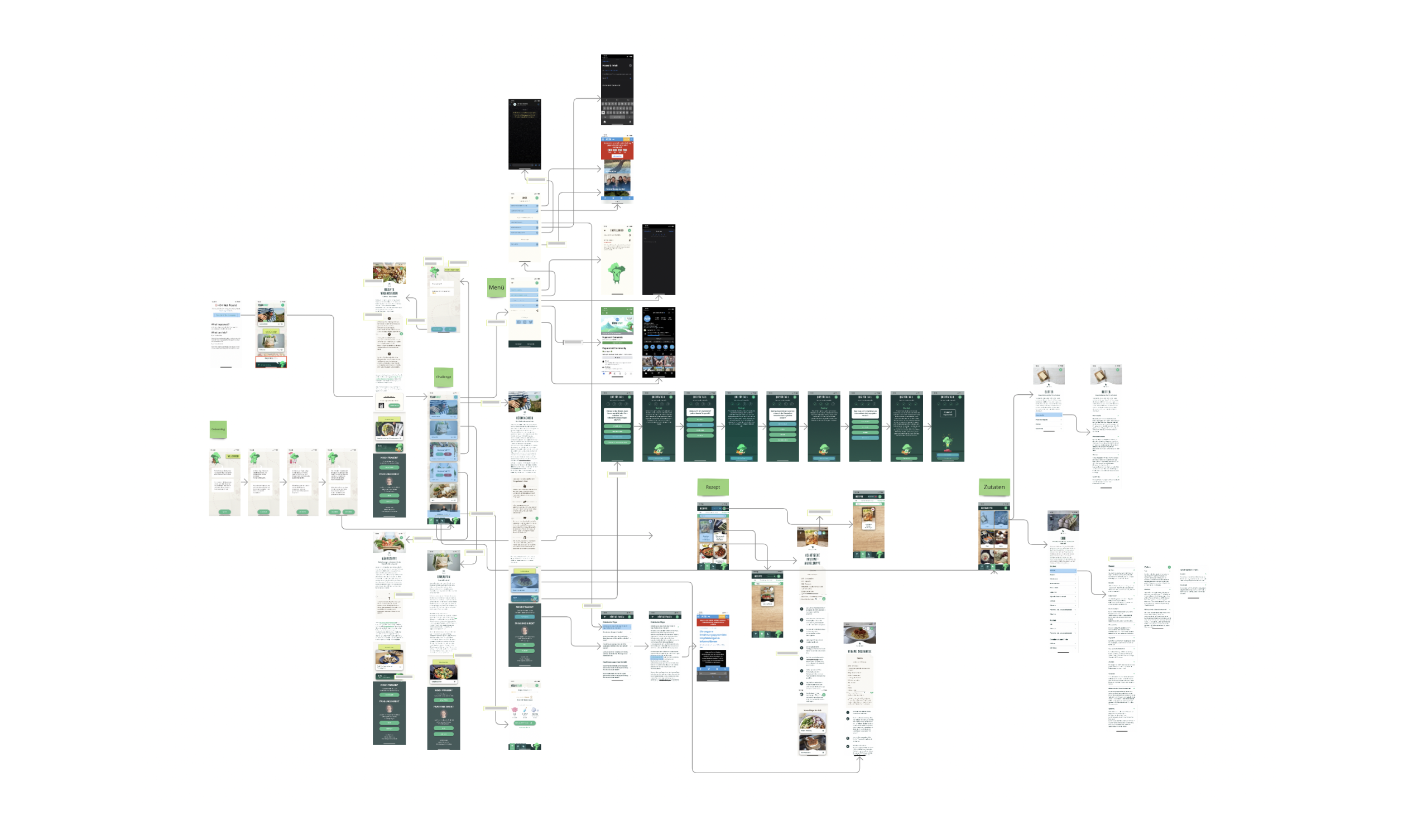
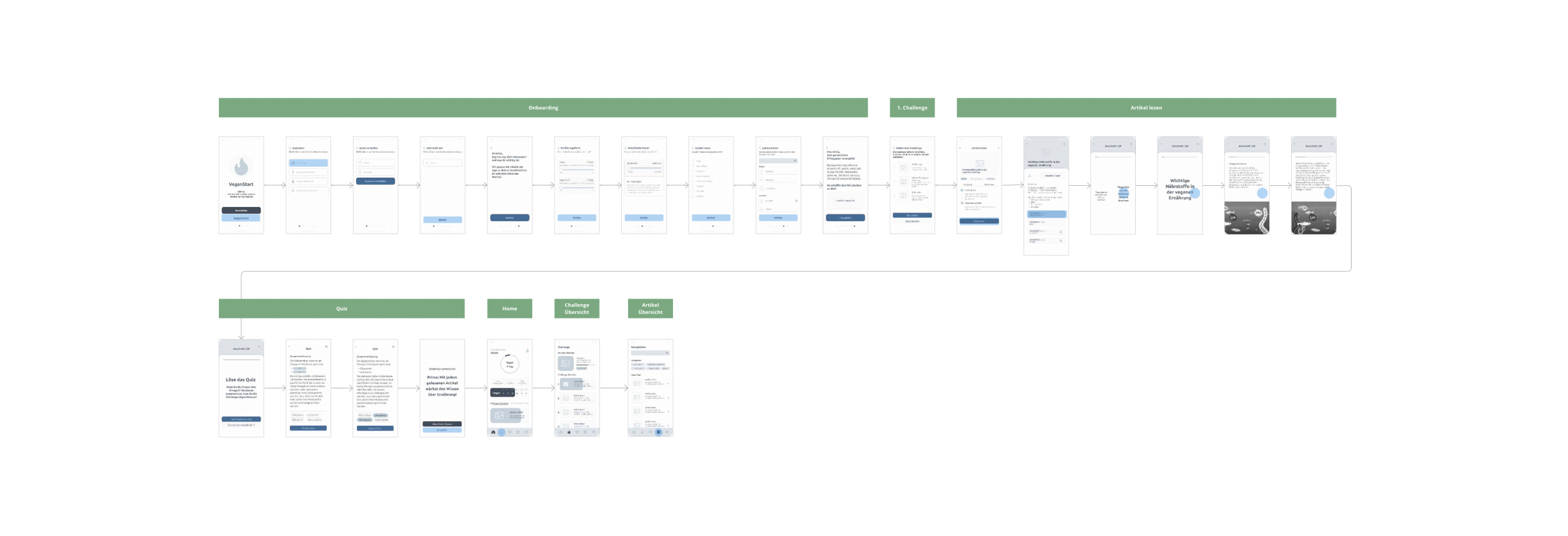
To begin, we analyzed the VeganStart app to gain insights into its functionality, user opinions, and weaknesses. We conducted a competitive analysis and mapped the entire screen flow, which revealed weaknesses in the app’s navigation that could be confusing at times.
Key Learnings
_____________________________________________________________________________________________________
Motivation is not the main focus - but should be.
_____________________________________________________________________________________________________
Challenge approach is good but has significant potential for improvement.
_____________________________________________________________________________________________________
It is tiring to talk to the mascot every day. It scolds rather than motivates.
_____________________________________________________________________________________________________
The app is sometimes too childish and does not reach the target audience. (60% women age 11-29)
_____________________________________________________________________________________________________
There is sometimes too much text on the screens, and the text is not visually attractive.
_____________________________________________________________________________________________________
Users cannot personalize topics and recipes based on their interests.
__________
Interviews
We then conducted interviews with app testers and a survey to refine our user profiles. The user group consists of different groups, including vegetarians who want to eat vegan and omnivores who are interested in vegan or vegetarian diets. The majority of the user group is female, which aligns with the fact that only one-third of vegetarians and vegans are male.
The survey included questions about the person’s demographics, dietary preferences, motivation, and duration of transition. The survey also found that the time for diet transition typically lasts between 1-3 months and up to 6 months, which is longer than the 30 days targeted by the VEGAN START app.
From this research, we found that our target audience desired motivation and support, especially through information. About one third of the respondents reported that accumulating knowledge helps them stay motivated during dietary changes. The more they knew about factory farming the more likely they are to stick to their chosen diet.
The interview helped us answer the question of what factors aided in transitioning to a plant-based diet and what features an app should provide for users to learn about vegan topics.

__________
Concept Development
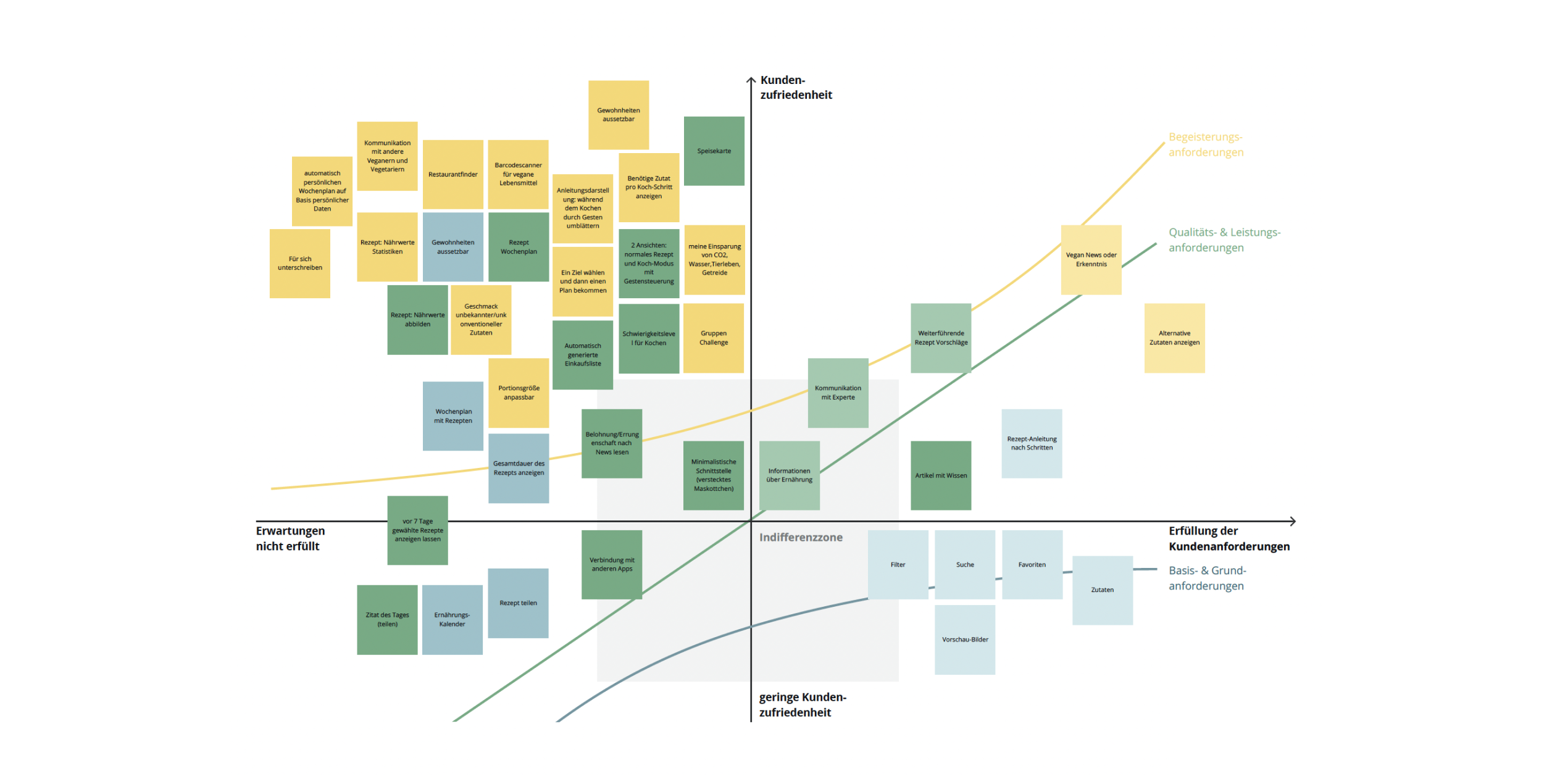
After reviewing our collected information, we formulated “How Might We” questions to help determine the requirements of our app. By creating a Kano model, we gained a clear understanding of the functions that are relevant to users and were able to prioritize them. Using Crazy 8, we developed several ideas for Delight Features.
We decided on an extensive knowledge database as our Delight Feature, which contains countless articles on all aspects of a plant-based diet. These articles include animations that educate and motivate users. With this feature, we hope to establish a foundation for sustainable user motivation.
Personalized content tailored to users’ interests is the best way to encourage their engagement. For example, someone who is changing their diet for health reasons may not be interested in animal welfare news. We wanted to understand how we can motivate through design, so we looked at Behavioral Design and Nudging. Nudging means subtly directing people towards a certain direction without applying pressure or strong influence. We assume that our users are looking to change their diet with the app, so we want to actively support this goal without unconsciously influencing users.
__________
UX and UI Design
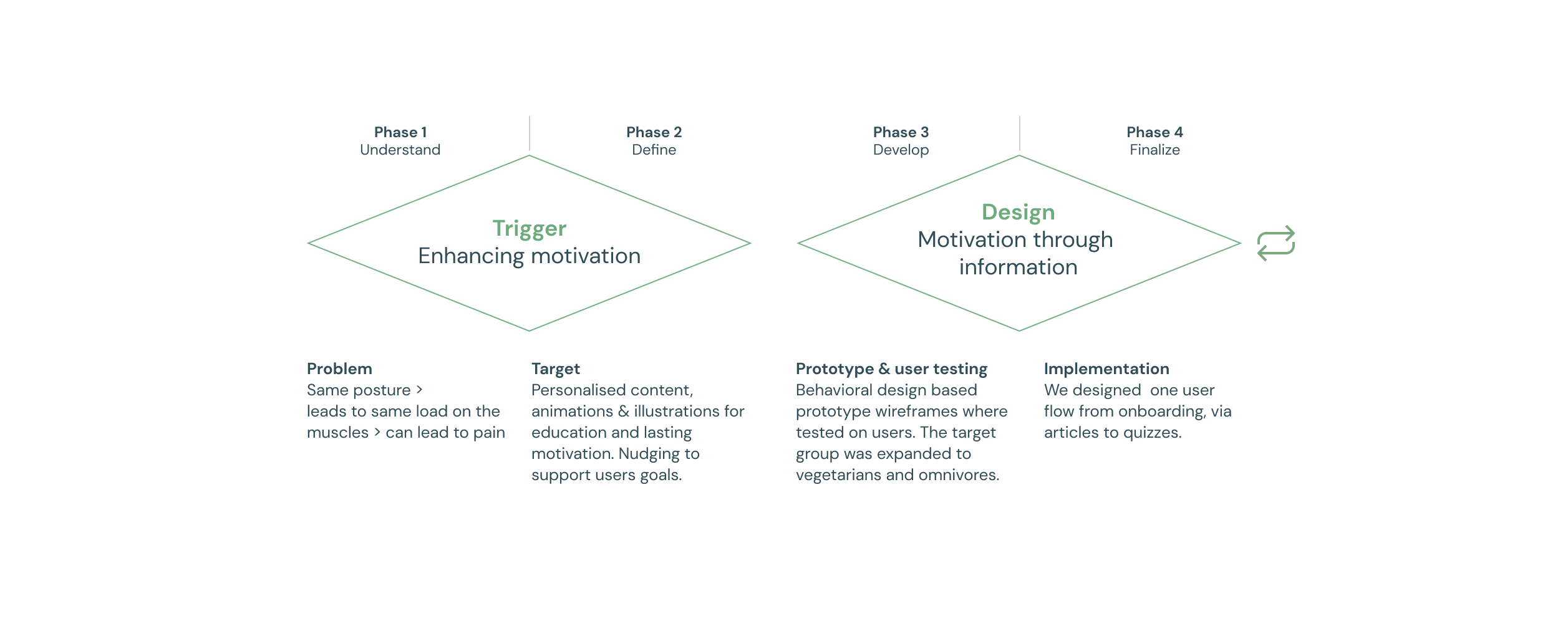
The concepts of Behavioral Design and Nudging helped shape our wireframes, which we subsequently tested with users. We created mood boards for several styles, and decided on a style that corresponds to our user group. To establish our design more holistically, we defined Branded Interactions. Our app should be personal, motivating and friendly. The content and appearance are empathetic and tailored to users.
Animations are playful and complement the appearance. Users should feel comfortable in the app. The application is designed to be cheerful and inviting. Users receive praise and recognition for correct answers in the quiz. There is no judgment for setbacks and mistakes, but rather understanding.
Appealing animations complement content in the app and solidify learned knowledge. The information structure is simple and intuitive. Challenges support users in achieving milestones in their diet and motivate through knowledge.
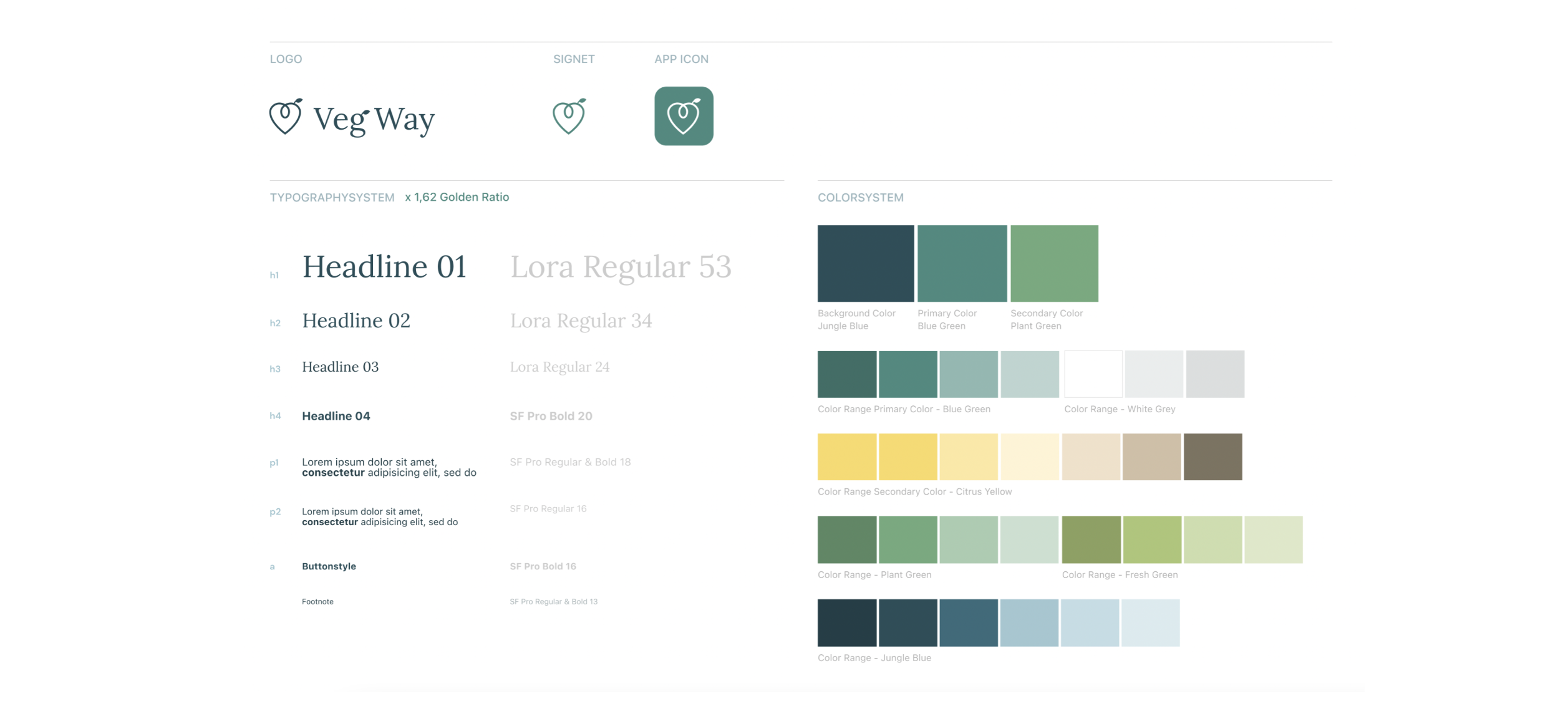
In addition, we have designed a new information architecture based on the tested wireframe screenflow. To simplify the usage of the app, we have also used familiar conventions in app design. The overall color scheme is natural and calm, but the selection is strong enough to create contrasts. In addition to the sans-serif main font, we wanted to use a serif font in headings to highlight our information hierarchy.
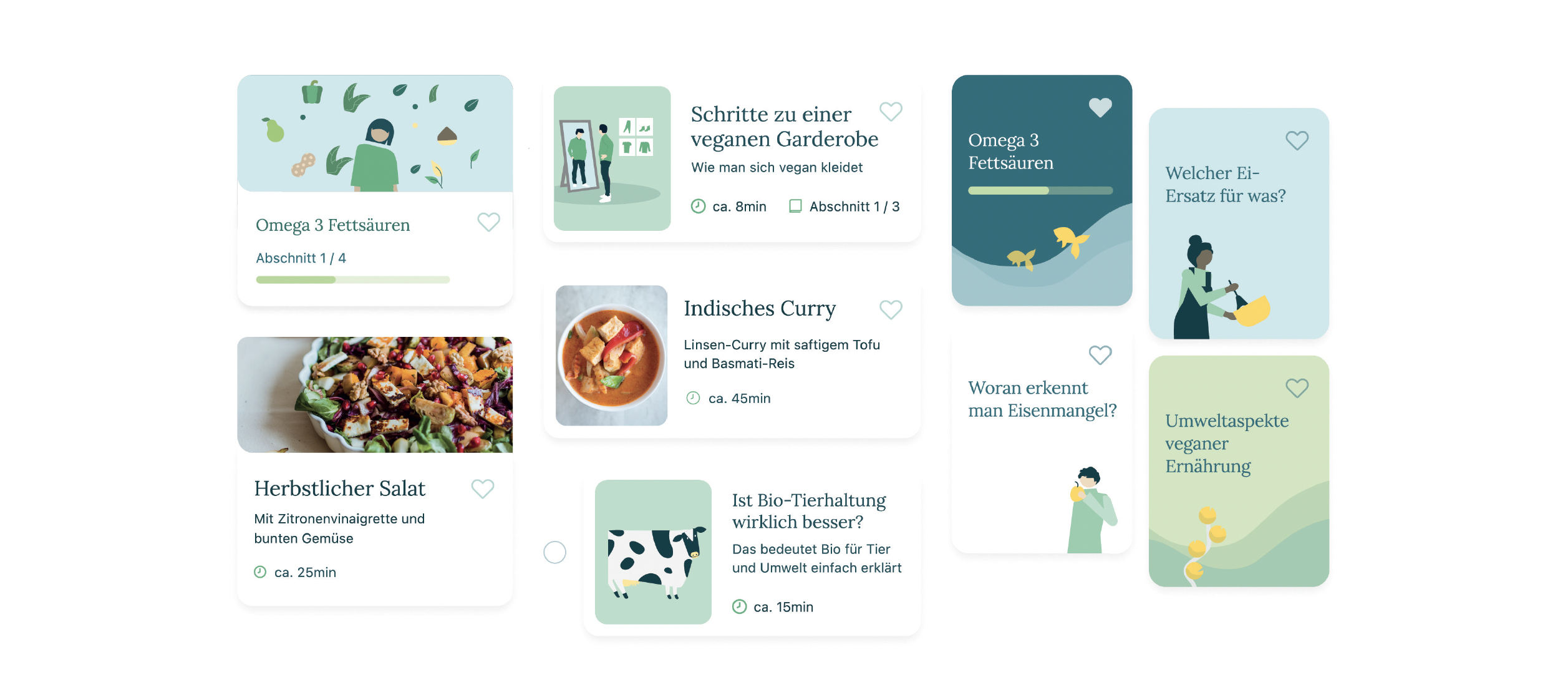
We renamed VeganStart to VegWay because the original name did not appeal to our target audience. Our audience includes not only beginners of a vegan or vegetarian diet but also those who have been on this path for a while and those who just did their first steps on this path. Images and illustrations separate the content into recipes and knowledge articles. The content within the app is arranged in UI cards. We integrated the new identity into the app and conducted further user testing to ensure that our design decisions were effective.
__________________________________________________________________________________________________________
Conclusion
This project allowed us to carry out a method-based design process and gain experience with nuances such as micro interactions and nudging, as well as other small design elements. The redesign aims to not only assist a growing target audience in transitioning to a vegan diet, but also to contribute to climate goals and reduce the consumption of animal-based foods.
Our team successfully improved the usability of VegWay and provided users with more motivation and support through carefully animated information. Overall, the redesign of VegWay was a successful project that would help many people transition to a plant-based if it was implemented.